COPYRIGHT – Prescription of action for infringement despite the ongoing marketing of the creation still in progress on the date of the writ of summons

CA Paris, May 17 2023, 21/15795. The Paris Court of Appeal handed down a decision in which it ruled that the prescription for an infringement action expires after five years, regardless of whether acts of marketing and distribution of the disputed work continue beyond that period.

The musical work “A World Without Danger” was created by two songwriters as the theme tune for the cartoon “Code Lyoko”. The latter felt that an album produced in 2010 by two performers from the group “The Black Eyed Peas” used the melody from their work in their track “Whenever“.

In December 2011, the latter gave the performers formal notice to pay compensation for the damage suffered as a result of counterfeiting. However, it was only on June 6, 2018 that the songwriters finally took legal actions against the performers and the companies distributing and producing the album for copyright infringement.

The first-instance judgment dismissed the defendants’ plea of prescription, but declared the plaintiffs inadmissible for failing to justify the originality of the work claimed.

The songwriters have appealed the decision.

On the question of prescription, the appellants considered that the copyright infringement action is of a penal nature “which provides for the possibility of a continuous infringement, of a successive offence” and that the purchase of an album “The Beginning” at FNAC stores

on April 27, 2018, a few days before the summons, demonstrated that the disputed work was indeed been distributed to the public, which was likely to interrupt prescription.

The respondents, for their part, considered that the claim had been time-barred since December 2016 at the latest, since the appellants had necessarily been aware of the marketing of the title “Whenever” since 2010, which was established by the sending of a formal notice dated December 30, 2011, and that actions subsequent to that date such as making the track available on the iTunes platform on March 27, 2018, or selling physical copies of the album at FNAC stores on April 27, 2018, were not separate acts of infringement, as they were simply an extension of the marketing of the track in 2010. 

The Court of Appeal finally overturned the judgment, pointing out first of all that copyright infringement action is “subject to the general prescription set out in article 2224 of the French Civil Code“. It then validated the respondents’ reasoning, ruling that on the date of the summons on June 6, 2018, the five-year statute of limitations had run, since the appellants had been aware of the disputed facts on the date of the formal notice in December 2011.

The Court then ruled that making the track available on the iTunes platform and selling physical copies of the album at FNAC stores in April 2018 were “merely the normal extension of the marketing and distribution carried out previously”, which did not trigger a new limitation period.
COPYRIGHT – Lack of originality for a selfie taken by an influencer in an elevator

Paris Court of Appeals, May 12, 2023, 21/16270. The Paris Court of Appeal issued a judgment in which it held that a selfie taken in an elevator cannot be protected under copyright law due to a lack of originality, nor under unfair competition and parasitism.

An influencer posted selfies taken with her dog in an elevator on social media and her blog, showing her outfits and providing affiliated purchase links.

The company MAJE launched an advertising campaign titled “Maje, my dog and I,” which, according to the influencer, reproduced essential characteristics of her selfies, especially since the model chosen by the company looks like her. She filed a legal action against the company for copyright infringement, unfair competition and parasitism.

The initial judgment dismissed the influencer’s claims based on copyright but ordered the company MAJE to pay 1,000 euros for material damages and 4,000 euros for moral damages under the parasitism claim.

Both parties appealed the decision.

Regarding copyright infringement, the Court of Appeal noted that the photograph was not on the influencer’s public profile and only appeared in a “story” which by definition is temporary. However, several statements from influencer’s followers demonstrated that the photograph had indeed been disclosed to the public.

Concerning the originality of the selfie, the Court reiterated that the author must identify “elements reflecting their personality” and precisely indicate “the characteristics that constitute the infringement.”

The Court then observed that the influencer merely described the photograph without explaining the reasons behind her choices and failed to demonstrate how her adjustments were unique to her. The “selfie”

merely replicated the “artificial lighting of the elevator.”

Furthermore, it noted that “staging oneself and taking a photograph in an elevator using the selfie technique accompanied by a dog was already known on social media…” on accounts with a much wider audience.

The Court concluded that a “daily ritual…to showcase outfits” does not qualify as the photograph’s originality, as the influencer “cannot appropriate this style.”

Consequently, the Court logically concluded that the influencer “fails to establish the arbitrary choices she made regarding staging, contrast effects, lighting effects, element placement, or post-production/retouching work” and rejected her copyright claim.

Regarding unfair competition and parasitism, the Court held that “using a photograph that bears resemblances to the previously posted image on Instagram is not wrongful” and does not constitute unfair behavior by the company MAJE, as it aligns with current trends.

Additionally, the fact that some followers of the influencer’s Instagram account believed they recognized her in the disputed photograph does not constitute unfair competition, as the invoked risk of confusion pertains to the influencer’s person and not the services she offers within her professional activity.

The Court of Appeals also noted that the influencer’s notoriety on Instagram is relative, with a low engagement rate of 1.02% and a limited audience. Finally, concerning parasitism, the Court dismissed this claim for the same reasons mentioned above, adding that the influencer did not establish having made investments related to this visual and therefore failed to demonstrate individualized notoriety or economic value.

COPYRIGHT – Protecting a work of street-art

CA Paris, July 5, 2023, 21/11317. The Paris Court of Appeal has handed down a ruling in which it condemned Mr. Jean-Luc MELENCHON and his political party, La France insoumise (“LFI”), for infringement of the economic and moral rights of street artist COMBO.

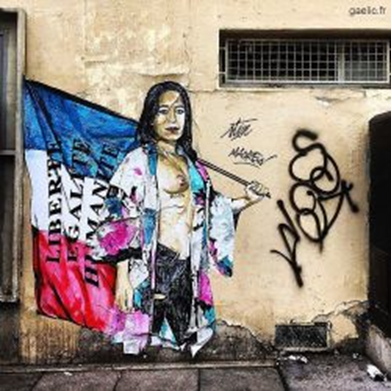
As part of the campaign for the 2017 presidential election and the 2020 municipal elections, videos produced for the campaigns of Mr. MELENCHON and LFI and distributed on several media (in particular on social networks), reproduced without the prior authorization of the artist COMBO, nor mention of his name, his work “La Marianne Asiatique” (Asian Marianne):

COMBO sued Mr. MELENCHON and LFI before the Paris Judicial Court, which dismissed its claims on the grounds of copyright infringement.

COMBO lodged an appeal with the Paris Court of Appeal, which upheld all of his claims.

Regarding the admissibility of the claims against Mr. MELENCHON, the Court ruled that Mr. MELENCHON was indeed responsible for the publications made on his official accounts, regardless of whether they were administered by a third party, provided that it is not demonstrated that the latter acted independently and outside his mission.

The Court then assessed the copyright exceptions invoked by Mr. MELENCHON and LFI to rule out infringement of the artist’s economic rights.

As for the exception of panorama, it was rejected by the Court, as this exception is provided for by Article L.122-5-11° of the French Intellectual Property Code only for “architectural works and sculptures permanently located in public places “. The Court notably held that “in the case of a work of ‘street art’, which, as in the present case, is partly made up of pasted paper, and is therefore particularly subject to external hazards (deliberate damage, erasure by the owner of the support, alterations due to  weather conditions, etc.), it cannot be said that it is ‘permanently placed on the public road“.

In addition, an examination of the videos revealed that the work did not appear in an incidental or fortuitous way, as an element of the landscape or public space serving as a backdrop to the subject or the event dealt with, “but that it was deliberately integrated, in an aesthetic research which reveals the intention of the video’s author to make it an important element of the clip and to exploit the work by associating it with the political message being broadcast“.

The court also rejected the short quotation exception provided for in Article L.122-5-3° of the French Intellectual Property Code, noting that the name of the artist or the source of the work were not mentioned at any point in the disputed broadcasts, as required by law.

Furthermore, the use of the work in the disputed videos concerns only the face of the “Marianne Asiatique” (Asian Marianne), excluding any representation of the flag bearing the motto “LIBERTE-EGALITE-HUMANITE” (LIBERTY-EQUALITY-HUMANITY) and the message “NOUS VOULONS LA JUSTICE” (WE WANT JUSTICE). According to the Court, “it cannot be considered that this use, purely visual or aesthetic, without ideological content, would be justified by the critical, polemical, educational or informative nature of the videos concerned, consisting rather in a borrowing, without obvious necessity, for the purposes of illustrating the political discourse of LFI or Jean-Luc MELENCHON“.

As a result, the Court of Appeal found that Mr. MELENCHON and LFI had indeed infringed the Combo’s economic rights. It also found several infringements of the artist’s moral rights:

  • Infringement of the authorship: the Court held that the fact that the name of the author “COMBO” had already been deleted and replaced by that of the artist STYX was insufficient to justify the absence of any reference to the artist COMBO at the time of the broadcast of incriminated videos. According to the Court, Mr. MELENCHON and LFI “should have sought the author of the work in order to obtain his authorization. However, it has not been demonstrated or claimed that the slightest research was carried out“.
  • Infringement of the physical integrity of the work: The Court found that the unauthorized addition of the LFI sign and its unauthorized partial integration into an audiovisual medium with a sound message and subtitling “characterize an illegitimate appropriation” by LFI and Mr. MELENCHON. The Court also found that the integrity of the work had been infringed by “the addition of branches and a bird’s flight as a watermark, this addition not having been made directly on the work created by COMBO in the public space, as is sometimes the case with ‘street art’ works that undergo  modifications in situ  necessarily consented to by the author, given the inherently evolving nature of such works“.
  • Infringement of the spiritual integrity of the work: the Court considered that “even if the use (…) is devoid of any excess or controversy and is in line with republican and citizen values also claimed by COMBO (…), [the work] was used, without his consent, in support of the action and interests of a political party and personality, which was likely to lead to the belief that the author was lending his support or assistance“.

The Court therefore ordered Mr MELENCHON and LFI to pay COMBO the sums of:

  • €5,000 in compensation for his economic loss;
  • € 15,000 in compensation for his moral loss;
  • € 15,000 under Article 700 of the French Code of Civil Procedure.

TRADEMARKS – The use of paid referencing by a competitor located in another member state may ground the jurisdiction of the country targeted by the said referencing

CJEU, 5th Chamber, 27 Apr. 2023, C-104/22: the Court of Justice of the European Union (CJEU) ruled that the proprietor of a European Union trademark may initiate an infringement action before the court of the Member State in which the infringement took place if the defendant used paid referencing to target the public in that State.

In the present case, a Finnish company initiate an infringement action before the Finnish court against two German companies belonging to the group BERKY, based on its EU trademark “WATERMASTER”.

The Finnish company accused them of having committed acts of infringement on Finnish territory:

  • for the first company, by using its trademark to perform a paid referencing on www.google.fi (with the “.fi” extension) and thus display an advertisement for its own products.
  • for the second company, by using a meta-tag[1] on the website www.Flickr.com featuring its trademark in order to benefit from natural referencing of images for its own products on www.google.fi.

The two defendants claimed the lack of jurisdiction of the Finnish court on the grounds that the acts had not been committed in Finland because neither the commercial promotion activities nor the product sales activities were aimed at Finnish consumers and that the mere accessibility of the allegedly infringing content did not make it possible to establish that those acts were aimed at the Finnish public.

Interrogated by the Finnish court, the CJEU first specified that the jurisdiction rules that applied were those of Regulation No 2017/1001 on the EU trademark, to the exclusion of Regulation No 1215/2012 on jurisdiction.

The CJEU then recalled the principle that an infringement action must be brought before the courts where the defendant is located, in which case it covers acts committed in the whole territory of the European Union.

The Court then set out the possibility for the trademark owner to bring alternatively an action before the courts of the Member State “where the act of infringement was committed or threatens to be committed“, in which case compensation can only be obtained for acts committed exclusively in the territory of the State concerned.

In view of the claimant’s choice to bring proceedings before the court in which territory the infringement took place, the Court stated that it must be examined whether there is “a sufficient connecting factor with the Member State in which the court seized of the infringement action is situated“, which requires “active conduct on the part of the person causing the infringement“.

In the absence of accurate information on the geographic delivery areas of the goods concerned, which is a “particularly important” evidence, the connecting factor must be established on the basis of other factors, such as the currency used or the language spoken in the country where the seller is located, the telephone numbers with the international prefix, the domain name used (including the extension), the expenditure on a referencing service or the address of the customers, being emphasized that “the mere fact that a website is accessible from the territory covered by the trademark is not a sufficient basis”.

More specifically regarding the two situations at stake, the Court concluded that:

  • the first company had engaged an active conduct as it “pays the operator of a search engine website with a national top-level domain of a Member State other than that in which it is established, in order to display, for the public of that Member State, a link to that undertaking’s website, thereby enabling a specifically targeted public to access its product offering“. Paid referencing therefore constitutes a sufficient connecting factor.
  • the second company had not engaged in active conduct, since ” the meta tag is intended only to enable search engines better to identify the images contained on that website” and “a website with a generic top-level domain is not intended for the public of any specific Member State“.

Accordingly, the CJEU found that the Finnish courts had jurisdiction over the action brought against the first company, but dismissed the action against the second company in the absence of evidence showing that such natural referencing was targeting a public established in Finland.


[1] A meta tag is an element of the website’s source code. It is not visible to website’s visitors but is used by search engines for referencing purposes.

PARASITISM – The 4-leaf clover no longer brings Van Cleef luck!

Paris Court of Appeal, June 23, 2023, No. RG 21/19404: Louis Vuitton’s marketing of the BLOSSOM jewelry line, featuring Van Cleef & Arpels’ emblematic four-lobed clover motif, does not constitute parasitic competition.

In 2015, Van Cleef sued took legal actions against Louis Vuitton for parasitism on the grounds that its BLOSSOM jewelry line, marketed :

  • (i) takes the four-leaf clover motif from its ALHAMBRA collection;
  • (ii) is the meticulous capture of his own ALHAMBRA collection, which includes a coherent set of 31 four-lobed jewels;
  • (iii) uses the same communication axes; and
  • (iv) has adopted the same pricing policy.

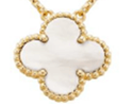
Jewel from the ALHAMBRA collection
Van Cleef & Arpels
Jewel from the BLOSSOM collection
Louis Vuitton Malletier

The Paris Commercial Court first recognized Louis Vuitton’s parasitic acts and ordered it to pay 214,400 euros in damages, prohibiting it from continuing to market its jewelry.

Following an appeal by Louis Vuitton, the Court overturned this ruling, considering that while the clover “is an emblematic and well-known product of the Van Cleef & Arpels brand; and therefore [has] an individualized economic value like the collection in which it is used“, Louis Vuitton had not positioned itself in the wake of Van Cleef.

More specifically, the Court of Appeal sought to respond to the various arguments put forward by Van Cleef.

  • (i) With regard to the ALHAMBRA motif, the Court first noted that, despite the fact that this design is a repetition of a four-leaf clover and is identical in size to the plaintiff’s, there are numerous structural differences in the composition of the two jewelry collections.

In particular, the four-lobed shape of the BLOSSOM range is not routed, nor does it feature pearl settings or a double-sided character. The semi-precious stone is not smooth and has an additional element in its center.

The Court also considered that the four-lobed shape is “a well-known and customary element in the field of applied arts, particularly jewelry” and that “the use of colored precious or semi-precious stones set in precious metal appears to be part of fashion trends.

The Court added that Louis Vuitton found inspiration in its own four-leaf clover motif, found on its monogrammed canvas made up of the letters LV and four-petal flowers, and adapted it to market trends.

  • (ii) The Court also rejected Van Cleef’s argument that Louis Vuitton had taken over the entire ALHAMBRA range, in addition to the motif itself, by creating a complete collection of 31 four-leaf jewels.

On the one hand, the Court noted that it is customary in the jewelry sector to offer a whole range of jewels (bracelets, earrings, necklaces, etc.).

On the other hand, Louis Vuitton’s BLOSSOM range also includes other floral motifs, in particular its emblematic pointed flower motif, which shows that it is not seeking to create a collection or sub-collection that would imitate, without any effort on its part, Van Cleef’s ALHAMBRA range.

What’s more, the colors of the semi-precious stones and the gold of the precious metal differ between the two ranges and are, once again, hues frequently used for the same collection in the jewelry sector.

  • (iii) The judges then ruled that Van Cleef could not rely on an undue use of the theme of nature to communicate on the BLOSSOM collection, since it was processed differently in terms of colors, the same chromatic being used by Louis Vuitton to communicate on its other products, such as shoes.

The Court concluded that “no break in the communication strategy of the Vuitton companies with the aim of following in their wake” had been demonstrated.

  • (iv) Lastly, the Court also concluded that the alleged adoption of a pricing policy had not been demonstrated for the BLOSSOM collection, since “price variances appear to be heterogeneous, and can be significantly lower, identical or higher depending on the product“.

The Court therefore ruled out any wrongful conduct on the part of Louis Vuitton on the basis of the evidence produced, “even taken in combination“, stressing that the risk of association “deduced from comments made by a few Internet users on social networks” was insufficient.

Newsletter

Subscribe to our newsletter to be informed of our news

Privacy Overview

This website uses cookies so that we can provide you with the best user experience possible. Cookie information is stored in your browser and performs functions such as recognising you when you return to our website and helping our team to understand which sections of the website you find most interesting and useful.