Selective distribution network and misleading advertising

Court of Cassation, Commercial Chamber, 19 October 2022, 21-18.301

In the field of distribution, the control exercised by suppliers over the methods and conditions of marketing their products by distributors is a key issue. This issue is all the more important in selective distribution, where the brand image of the products and their necessary protection require and justify a stricter control.

In this respect, the action for misleading commercial practices, formerly provided for in Article 121-1 of the Consumer Code and now codified in Article L. 121-2 of the same code, may constitute a relevant means of action in that it allows a company to act against a misleading act even if it is not perpetrated by a competing company.

Indeed, there are situations where companies outside a network, and sometimes even outside the market concerned, can cause damage to an image. This was the case in the present case, in which the Court of Cassation was asked to rule on the possibility for the promoter of a selective distribution network to bring an action for misleading advertising against a company that had advertised a website unlawfully marketing its products.

The facts go back to February 2010 : the France Télévisions TV channel had presented a site offering various perfumes for sale during its “Télé matin” and “C’est au programme” programmes. Some of the products sold by this site were part of the selective distribution network of the Coty company, which holds licences for luxury products of the Calvin Klein, Davidoff and Chloé brands.

As Coty had not given any approval to the company holding the site for the purposes of this marketing, it sued it for parasitism, unfair competition and misleading advertising, also invoking the joint and several liability of France Télévisions for the latter.

In a decision on referral after cassation of 9 June 2021, Chamber 5-4 of the Paris Court of Appeal found the company’s network to be lawful and concluded that there had been a breach of the prohibition on resale outside the network (on the basis of the former Article 442-6, I, 6°), as well as the characterisation of an act of unfair competition and parasitism by the company owning the site.

In addition to the liability of the owner company, the Court decided to hold France Télévisions jointly and severally liable for having indirectly participated in the damage caused to the network by promoting the site in question and engaging in misleading commercial practices through false advertising. It thus sanctioned the company for having led people to believe that it was possible to legally acquire products through the website, even though the said products were being resold illegally, regardless of whether the advertising was not commercial in nature and was not disseminated for profit-making purposes.

As a reminder, to qualify as a misleading commercial practice, it is necessary to show that the act in question causes confusion with another good, service or trademark, or that it is based on false or misleading claims, indications or presentations concerning the essential characteristics of a product. In the case of an undertaking other than the seller of the promoted products, this sanction may be applicable provided that it acts in the name of or on behalf of the latter (CJEU, 17 October 2013, Case No. C-391/12).

Consequently, a company engaged in journalistic activity such as France Télévisions could be held liable if it were to infringe a trademark in a proven manner and profit from it or engage in it for the benefit of a related company.

In this case, France Télévisions had no commercial link with the owner of the site and did not benefit directly from the advertising. The Paris Court of Appeal had therefore adopted a broad approach, considering that the site’s broadcasting gave the consumer the false impression that he could lawfully acquire products of the brands in question, and therefore constituted a misleading commercial practice, even in the absence of a profit-making purpose.

Following an appeal lodged by France Télévisions, the Court of Cassation partially annulled this decision for having retained the commercial nature of the message broadcast during the programme without demonstrating how it was promotional rather than informative.

Also, the decision was censured for having concluded that there was a misleading commercial practice without showing how the content of the remarks made by the presenter of the programmes could lead to confusion, presented false information or was likely to mislead on the essential characteristics of the products.

Thus, the Supreme Court confirms the possibility of engaging the liability of the author of an act of advertising relating to a company practising off-network resale. However, this action cannot be authorised solely on the basis of the illegality of the resale of the products in question and remains conditional on the fact that the conditions laid down for misleading advertising are also met with regard to the act of advertising itself.
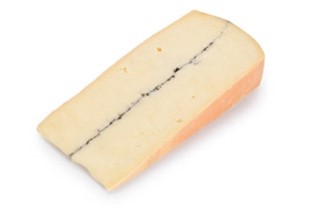

The reproduction of a dark central horizontal line on a cheese constitutes an infringement of the “Morbier” PDO for a cheese that does not have this designation

Paris Court of Appeal, November 18th, 2022, RG n°21/16539

The recent decision of the Paris Court of Appeal concludes the long legal saga concerning the “Morbier” PDO.

In this case, the “Syndicat interprofessionnel de défense du fromage Morbier” accused the “Société Fromagère du Livradois” of infringing the “Morbier” PDO and of committing acts of unfair and parasitic competition by marketing, under the name “Montboissier”, a cheese with the visual appearance of the product covered by this PDO, but not benefiting from it, by the presence of a dark line dividing the cheese horizontally.

The Morbier PDO
The Montboissier

The CJEU issued a ruling (CJEU, December 17th, 2020, C-490/19), in which it noted that the protection of PDOs should no longer be understood as relating solely to the name, but that it can also relate to the appearance of the product, when it is particularly distinctive, which can mislead the consumer as to the true origin of the product.

The Court of Cassation (Cass. Com, April 14th, 2021, n°17-25.822) followed the lessons of this decision, by censuring a decision of the Court of Appeal in which it was argued that the PDO regulation did not aim at protecting the appearance of a product or its characteristics described in the specifications.

In the referral decision rendered on November 18th, the Court of Appeal had only to follow the rules laid down by the supreme courts.

Based on consumer surveys, the Court estimated that the public in the presence of “Montboissier” will have in mind, as a “reference image”, the cheese of the “Morbier” PDO.

It therefore considered that the dark central horizontal line constituted a reference characteristic of the “Morbier” PDO, and that the use of this distinctive characteristic, combined with the use of the shape and appearance of the PDO, constituted an infringement of the “Morbier” name.

Therefore, the use of the appearance of a product protected by a PDO could now be considered wrongful.

The coexistence of a PGI and an earlier trademark is subject to good faith

Lyon Court of Justice, April 5th 2022, RG n°1/11459

This case involves a dispute between a PGI and an earlier trademark. Under Article 14(2) of Regulation No. 1151/2012, the coexistence of a PGI and an earlier trademark presupposes the good faith of the trademark owner at the time of filing.

In this case, a company registered the semi-figurative mark “Louis Auvergne” in 1988. Believing that this mark evoked the PGI “Auvergne sausage / Auvergne dry sausage“, effective since 2016, the INAO and the “Consortium des Salaisons d’Auvergne” (CSA) sued this company.

The Court granted the requests of the CSA and the INAO. It condemned the company for infringement and cancelled the trademark for fraudulent registration with respect to products similar to those of the PGI.

To characterize bad faith, the Court based itself on the fact that the process of recognition of the PGI was already underway when the earlier trademark was filed, and, since the company was initially part of the group at the origin of the PGI, it was perfectly aware of it.

Thus, this classic judgment reminds us that the coexistence of a prior trademark and a PGI is subject to good faith. A trademark filed before the recognition of a PGI, with the sole purpose of trying to avoid the future impossibility of evoking the PGI for products that do not comply with the specifications, must be cancelled for fraudulent filing.

The Member States’ obligation to stop products that do not comply with a Protected Designations of Origin (PDO) and are exported to countries outside the EU

In response to a request from the European Commission, the CJEU questioned whether Regulation No. 1151/2012 should apply to agricultural products exported to countries outside the EU where the name was not protected.

In this case, companies established in Denmark exported cheeses under the name “Feta” even though they did not comply with the specifications of the “Feta” PDO.

The Greek authorities reported to the European Commission the behavior of the Danish authorities, considering that they did not take any measures to stop the marketing of cheeses to third countries of the EU.

The Danish authorities considered that their practice was not contrary to EU law, as Regulation No. 1151/2012 would only apply to agricultural products marketed within the EU, and not in third countries.

It is true that, unlike the Wine Regulation (R. n°1308/2013) or the Spirits Regulation (R. n°2019/787), there is no provision in the Agricultural products Regulation (R. n°1151/2012) for the rules to also apply to exports.

However, the Court has remained in line with its case law, which aims to give maximum protection to geographical indications, and interprets the Regulation as broadly as possible, considering the literal terms of the text, but also its context and objectives.

Thus, the CJEU ruled that the Danish authorities, by failing to prevent and stop the illegal use of the “Feta” PDO to designate cheese that does not meet the specifications and exported to third countries, violate Regulation No. 1151/2012.

The refusal to register the mark “Normindia” attesting to a geographical origin

Paris Court of Appeal, December 17th 2021 RGn°21/01247

The Director of the INPI (the French National Intellectual Property Office) rejected the registration of the word sign “Normindia” to designate alcoholic beverages.

The Court of Appeal confirmed the decision of the Director of the INPI. It ruled that the “Normindia” trademark was deceptive and infringed the previous PGIs “Cidre de Normandie”, “Cidre Normand”, “Eau-de-vie de Normandie”, “Eau-de-vie de poiré de Normandie” and “Pommeau de Normandie”.  

The Court applied Article L.711-3 of the Intellectual Property Code, as it read prior to the 2019 reform, which prohibited the registration of marks that are likely to deceive the public about the geographical origin of the product.

The Court of Appeal held that the products were similar, and that the sign “presents a strong visual, phonetic and intellectual similarity with Normandy [the French region] and constitutes an imitation, or at least an evocation, of this French region, to which the PGIs at issue refer“.

In addition, it is also held that the sign “Normindia” is likely to mislead the public on the geographical origin, insofar as it can be applied to products from another region than Normandy. It should be noted that since the 2019 reform, infringements of PGIs and PDOs are now absolute grounds for refusing to register a trademark.

Newsletter

Subscribe to our newsletter to be informed of our news

Privacy Overview

This website uses cookies so that we can provide you with the best user experience possible. Cookie information is stored in your browser and performs functions such as recognising you when you return to our website and helping our team to understand which sections of the website you find most interesting and useful.